
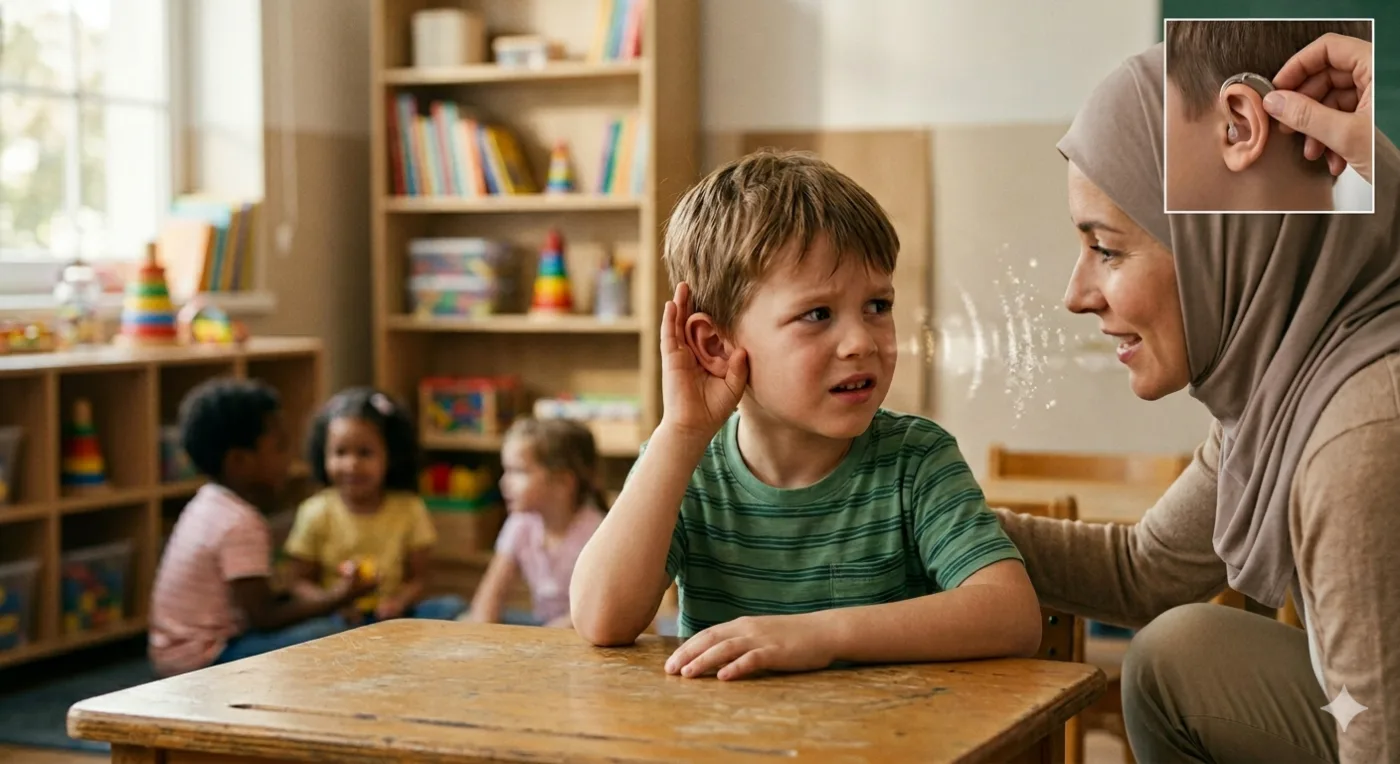
Hearing loss is one of the disorders that directly impacts a child's ability to communicate and interact with their surrounding environment. Since children acquire language and speech by hearing and imitating sounds, any impairment in auditory capacity can adversely affect their comprehension, expression, learning, as well as social and cognitive development.
The causes of pediatric hearing loss are diverse, ranging from genetic factors to infections or various trauma. Hearing loss may be present at birth (congenital hearing loss) or acquired during early childhood. Audiologists and Otolaryngologists (Ear, Nose, and Throat specialists - ENT) are the primary professionals responsible for evaluating the degree of hearing loss and determining the appropriate therapeutic interventions.
Physiology of Hearing
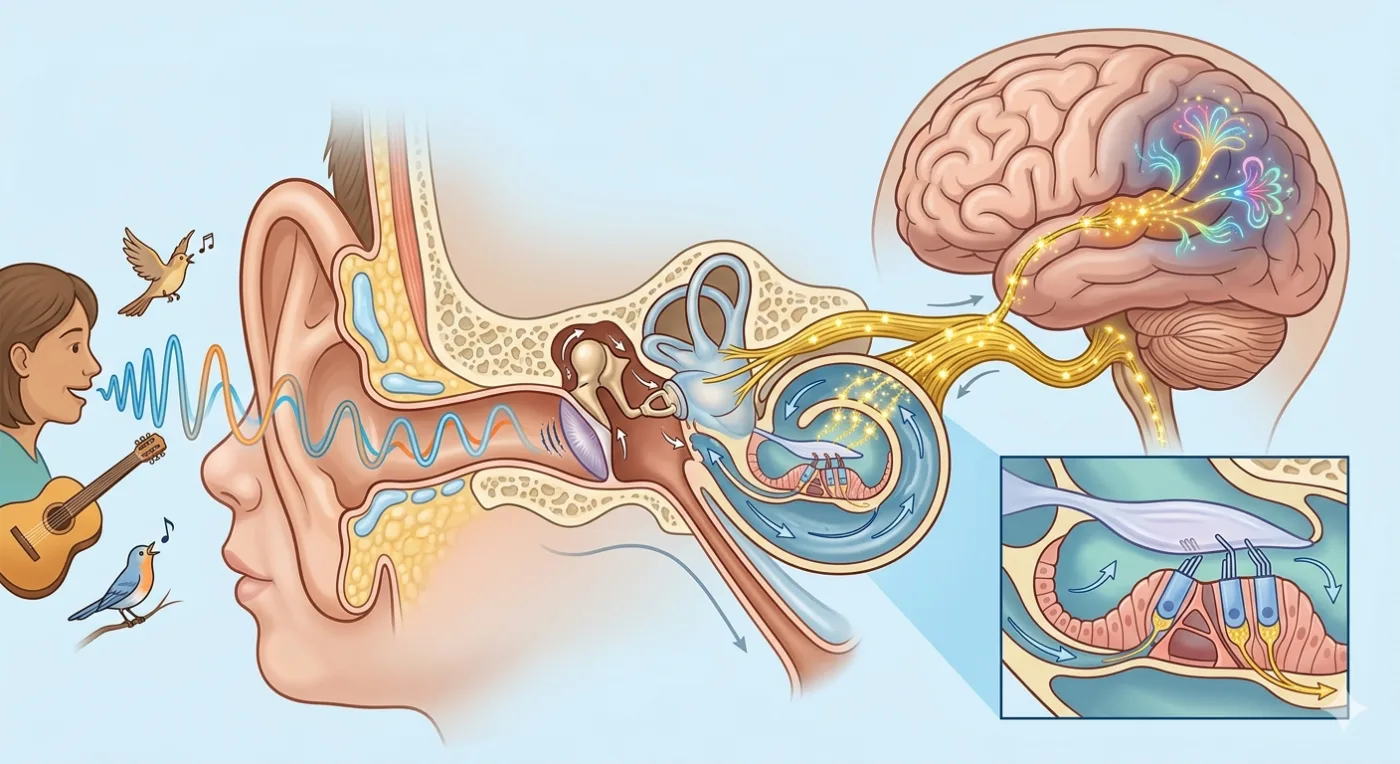
The auditory process begins when sound waves travel from the sound source to the outer ear, passing through the ear canal to the tympanic membrane (eardrum), causing it to vibrate. The vibration of the eardrum moves the middle ear ossicles, which are: the malleus (hammer), the incus (anvil), and the stapes (stirrup).
This movement generates waves within the fluid of the inner ear (cochlea). Microscopic hair cells inside the cochlea convert these waves into neural impulses, which are transmitted via the auditory nerve to the brain for interpretation and comprehension. Any dysfunction within this auditory system can result in varying types and degrees of hearing loss.
Types of Hearing Loss
Upon diagnosing a child with hearing loss, the audiologist determines its specific type and severity. Hearing loss is categorized into three main types:
1. Conductive Hearing Loss
This occurs due to a disruption or obstruction in the transmission of sound through the outer or middle ear. Causes may include: middle ear fluid accumulation (otitis media with effusion), middle ear infections (otitis media), cerumen (earwax) impaction in the ear canal, or congenital anomalies of the ear or ear canal. Conductive hearing loss is often treatable through medical or surgical intervention.
2. Sensorineural Hearing Loss
This type results from damage or dysfunction within the inner ear, the cochlea, or the auditory nerve. It is typically permanent and may not be fully reversible through medical or surgical means. However, many children benefit significantly from hearing assistive technologies, such as hearing aids or cochlear implants, which help improve the reception of auditory signals or bypass the damaged part of the auditory system.
3. Mixed Hearing Loss
This is a combination of both conductive and sensorineural hearing loss, meaning more than one area of the auditory system is affected.
Stages of Hearing Loss
The audiologist measures the child's ability to hear sounds at various frequencies (pitches) and intensities (loudness). The results are plotted on a graph known as an audiogram, which displays: the degree of hearing loss, the configuration (shape) of the hearing loss, and the intensity levels required for the child to detect different sounds.
The degrees of hearing loss are classified as follows:
Mild Hearing Loss: The child experiences difficulty hearing faint sounds or understanding speech in noisy environments.
Moderate Hearing Loss: The child struggles to follow normal, everyday conversations.
Severe Hearing Loss: The child finds it difficult to hear loud speech or prominent environmental sounds.
Profound Hearing Loss: The child cannot hear speech or very loud sounds without the use of specialized assistive hearing devices.
Treatment of Hearing Loss
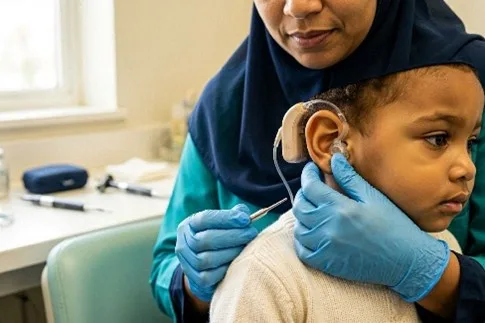
Management of hearing loss depends heavily on its type, severity, and underlying etiology. Therapeutic interventions may include: pharmacological treatment, surgical intervention, the use of hearing aids, or cochlear implantation. This is in addition to the crucial component of auditory and speech-language rehabilitation programs.
Early intervention is a critical factor in optimizing the child's linguistic, cognitive, and academic development, given the profound link between hearing and the development of speech, language, literacy (reading and writing), and social skills.
Therefore, parents, educators, and specialists are strongly advised to seek immediate evaluation whenever hearing impairment is suspected in a child, ensuring the delivery of the right intervention at the right time.

Dr. May Othman
Speech Language Specialist