The Developmental Evolution of Play Skills in Children
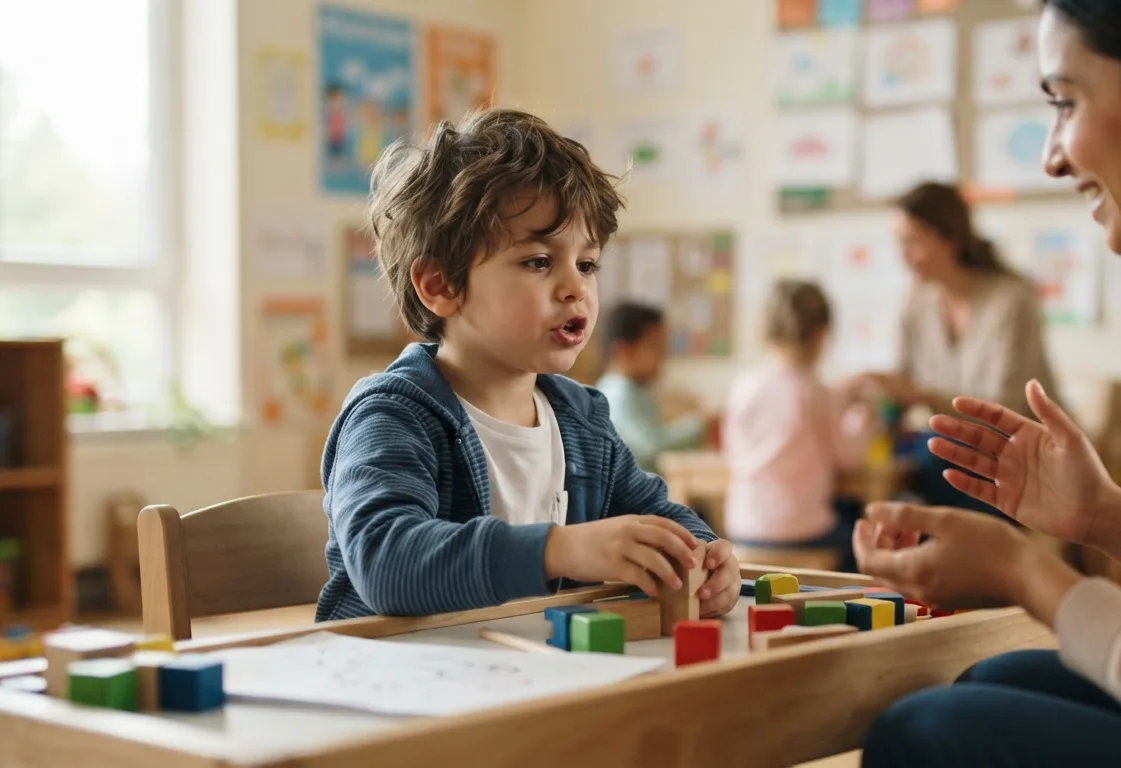
In the world of childhood, play is often perceived as mere pastime or a means to expend excess energy; however, a profound scientific and clinical lens reveals a far greater reality.
In its purest essence, play is the child’s primary occupation through which they engage with the world, and the first language they use to translate their cognitive perception and interaction with their surroundings. Far from being a transient luxury, play is an imperative necessity and a vital window offering a direct view into the maturation of their nervous system and their psycho-social integration.
With every exploratory movement and every imaginative role they assume, children forge new neural pathways and connections, sharpen their executive functions, and lay the solid foundations for emotional balance and problem-solving skills
To understand this more clearly, consider this simple scenario:
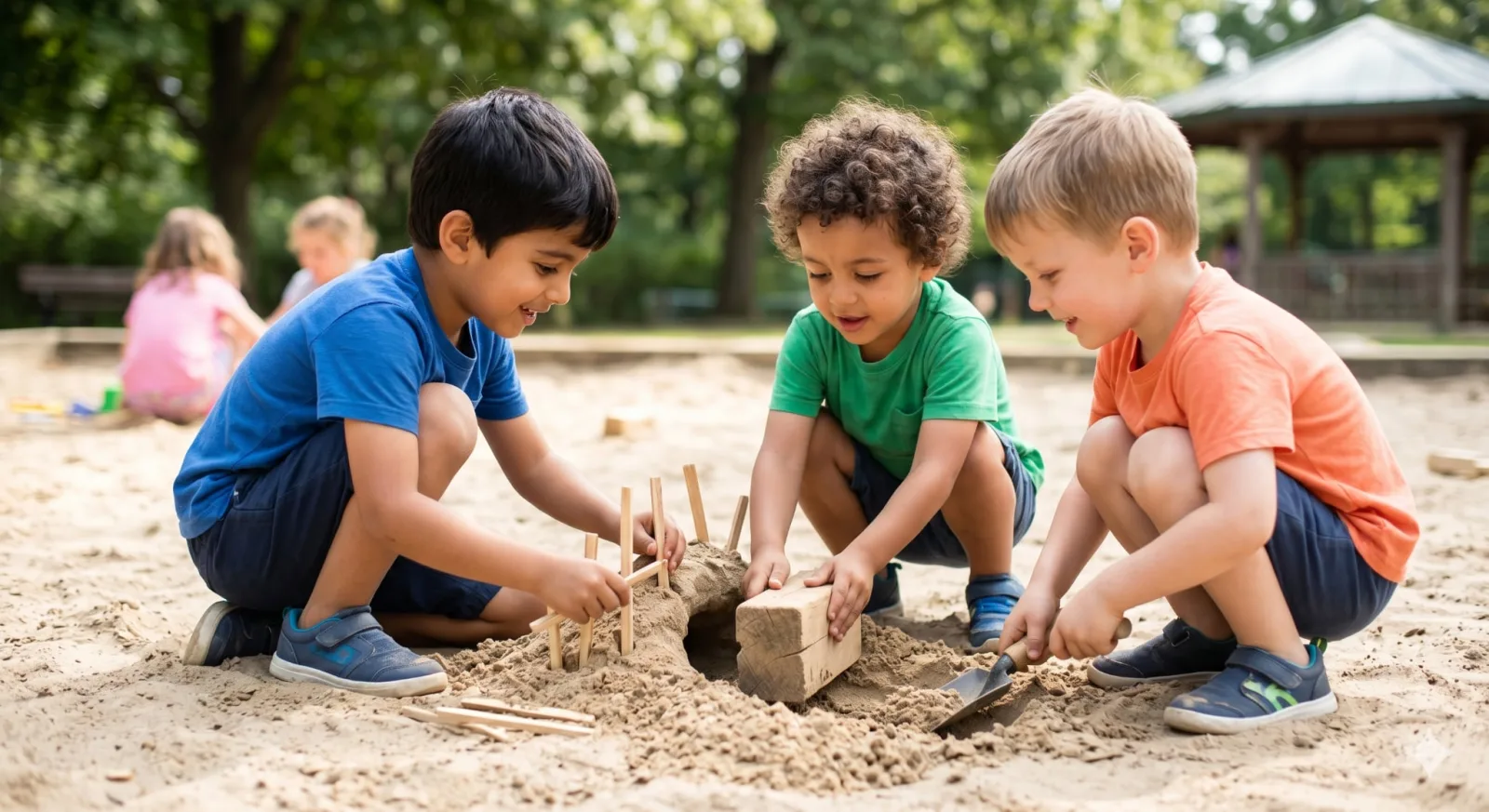
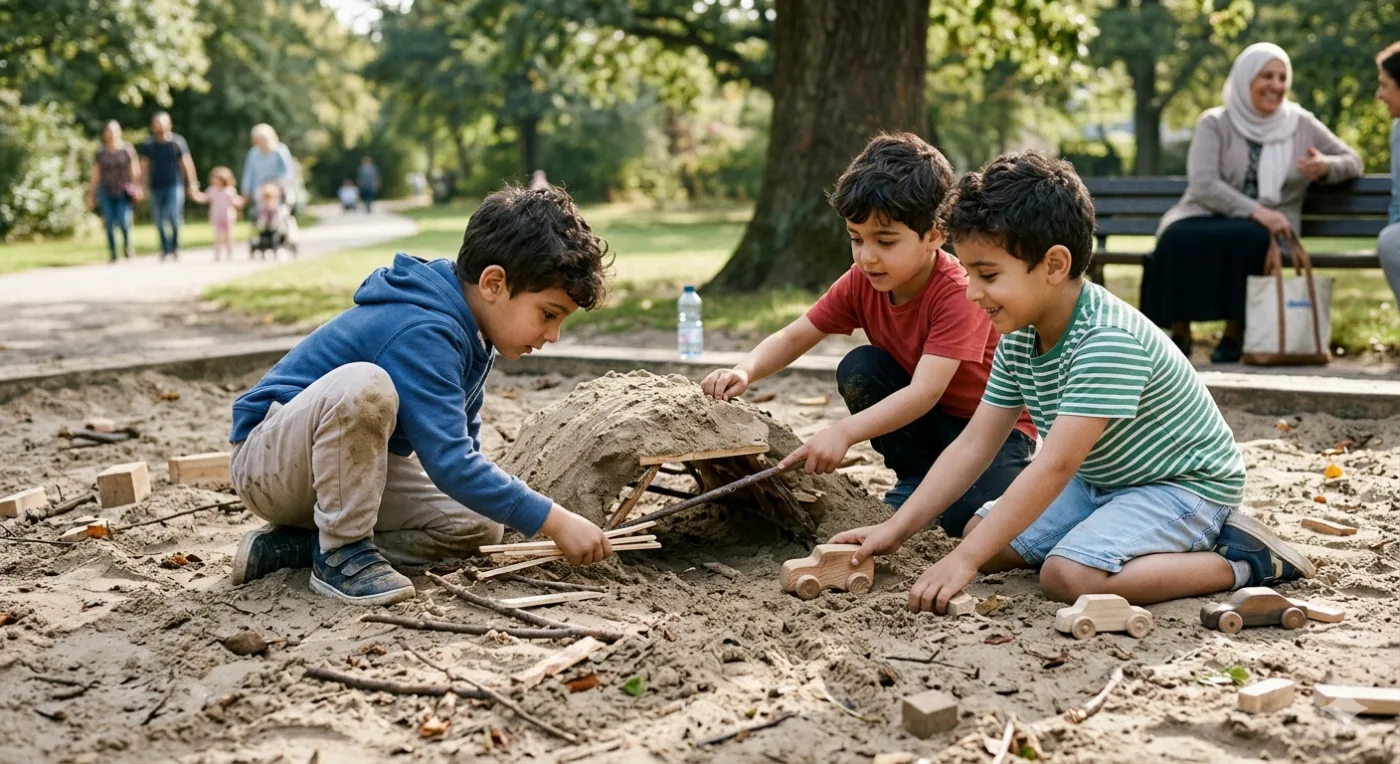
Mohammed is left by his mother at his grandmother’s house while she goes to work, where he meets his cousin, Abdullah. Their grandmother takes them daily to a nearby park to play. One day, Mohammed and Abdullah went to a sandbox, where they met another child named Zaid.
Mohammed began digging a tunnel in the sand, while Abdullah brought small wooden blocks, imagined they were cars, and started driving these "cars" into the tunnel built by Mohammed and Zaid so they would come out the other side. After a while, the tunnel collapsed. The three children began brainstorming a way to prevent it from falling again; they brought small wooden pieces and placed them underneath the tunnel to stabilize it, then repeated the experiment.
To many, this story might seem ordinary, but for specialists, it carries profound significance. It reveals the development of imaginative play in children, and their use of symbols and fantasy. It also demonstrates how they learn problem-solving, cooperation, and social communication through play. During play, a child does not merely move; they express emotions, experiment with ideas, test their understanding of the world, and learn how to interact with others.
Hence lies the importance of understanding the developmental progression of children's play skills. Play does not develop randomly; rather, it progresses through sequential stages where sensory, motor, cognitive, social, and emotional dimensions intertwine.
It is also crucial to realize that a child's sense of security is the foundation from which they launch into exploration and play, especially during early infancy. When an infant feels that their environment is safe, they begin to interact with and explore it. This exploration represents the very first building block of play.
In the beginning, infants rely on simple sensory experiences, such as moving objects, putting toys in their mouths, or banging them on the floor to hear sounds or watch them move. Despite the simplicity of these actions, they contribute to developing motor and sensory skills, as well as understanding cause-and-effect relationships.
Furthermore, parental interaction during play significantly impacts a child's development. When an infant mimics the sounds, movements, or facial expressions of their parents, they gradually develop communication, attention, and social interaction skills.
As the child grows older, the form and function of play shift. During the preschool years, children begin to integrate more with their peers, and play transforms into a space for building social relationships, language development, and imaginative expression. The child becomes capable of creating fantasy scenarios, role-playing, and using objects as symbols for other meanings—a stick becomes a horse or a sword, and wooden blocks become cars inside a sand tunnel.
In the early school years, children enter the stage of organized, rule-based play, where they begin to comprehend winning and losing, respecting turns, adhering to laws, and participating in team games and various sports.
From a developmental perspective, the evolution of play can be understood through a series of progressive and cumulative stages. These stages are not entirely isolated from one another; rather, previously acquired skills persist, and new ones are layered on as the child grows.
The first stage begins at birth and lasts through the first few months, featuring what is known as unoccupied or exploratory play. Here, the infant engages in simple, random movements and attempts to explore the surrounding environment through senses and motion.
Next, the child transitions to the stage of solitary or functional play, where they occupy themselves playing alone, repeating movements and sensory experiments to discover the properties of objects and understand how they work.
Following this, the onlooker play stage begins, where the child observes other children playing and takes an interest in what they are doing, without actually joining in.
Then comes the stage of parallel play, where the child plays adjacent to other children using similar toys, but without direct interaction.
As language and imagination mature, associative play emerges. In this stage, children interact with one another, sharing toys, conversations, and ideas, yet without a structured or clear collective goal for the activity.
The child then reaches the stage of cooperative play, where children work together toward a common goal, learning turn-taking, organization, planning, leadership, and group commitment.
Finally, the stage of games with rules appears, which demands a higher level of cognitive, social, and emotional maturity. At this point, the child becomes capable of understanding and respecting rules, cooperating within a team, and regulating their emotions during victory and defeat
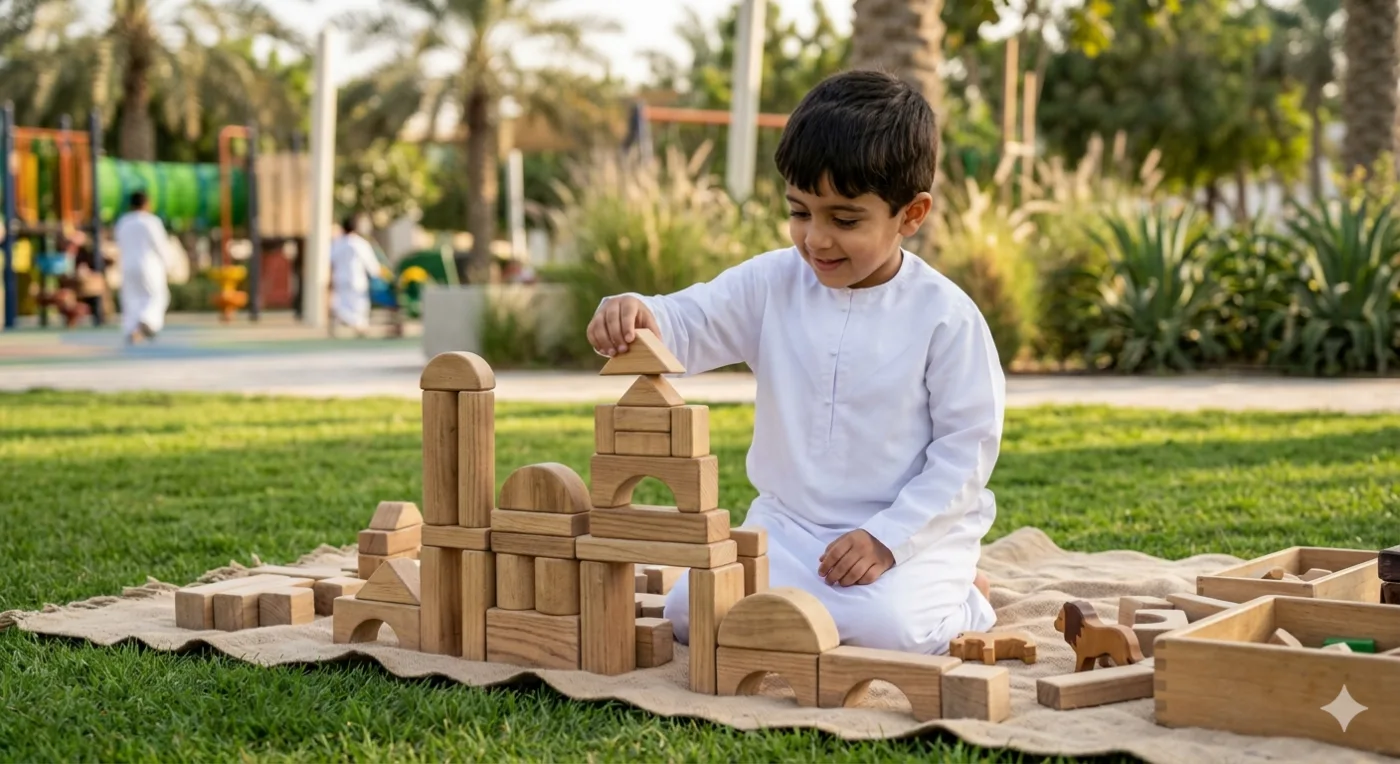
It is essential to understand that these stages do not always progress in a rigid or linear fashion. A child may shift between multiple play styles depending on their emotional state, sense of security, the nature of their surrounding environment, and the people around them. Furthermore, the emergence of an advanced stage does not imply the disappearance of previous ones; rather, they all remain a part of the child's behavioral and cognitive repertoire, to be utilized in different situations.
Ultimately, understanding play as an integrated developmental process helps parents view it through a different lens. Play is not merely entertainment; it is the fundamental medium through which a child shapes their personality, comprehends their world, and progressively and profoundly develops their psychological, social, and cognitive skills.
To elaborate further on each stage—and to make it easier for parents to monitor their children's developmental progression and understand the nature of play appropriate for each age—we will outline a detailed explanation of each stage individually below
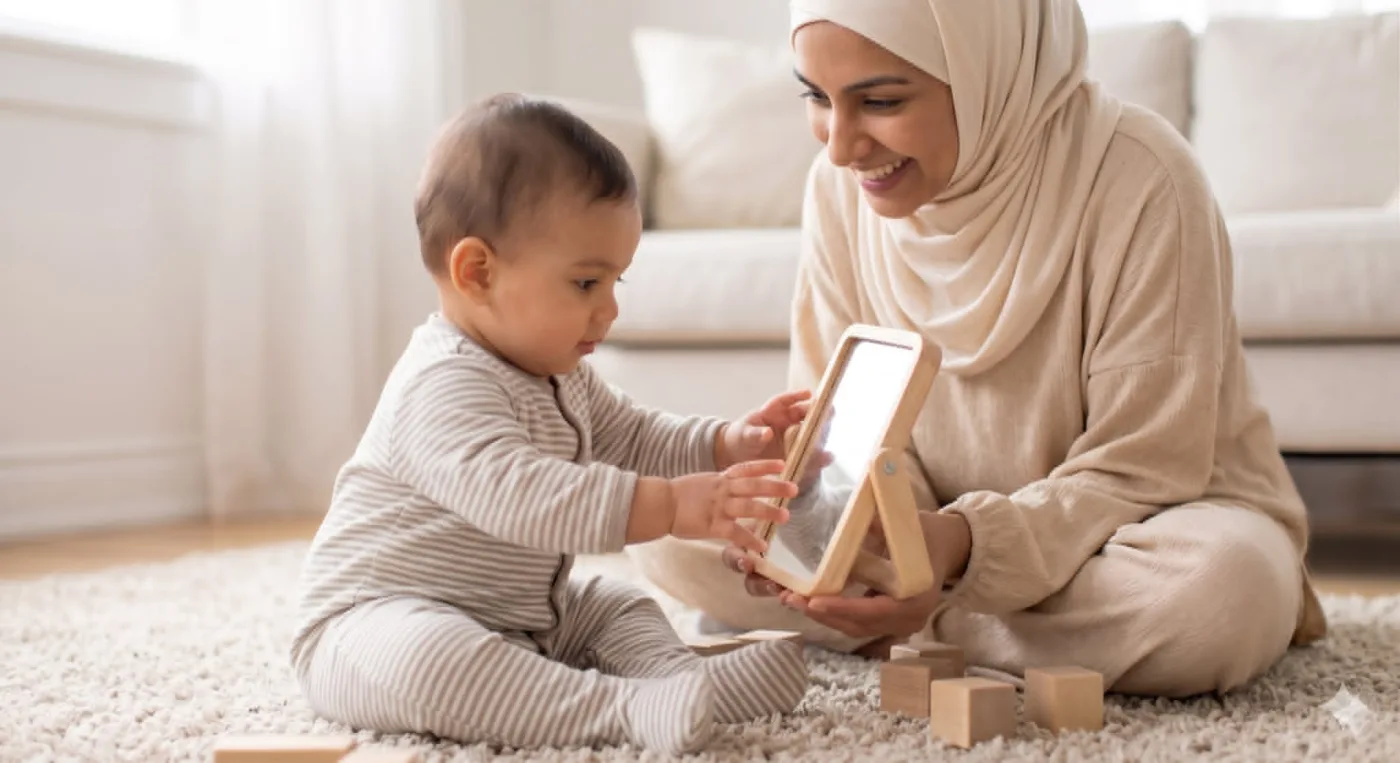
Stage 1: Random Exploratory and Functional Play (Birth to 3 Months)
The scientific term for this stage is: The Intersection of Unoccupied Play and the Onset of Functional Play.
During this stage, the infant does not appear to be playing in the conventional sense; rather, most of their movements are random, such as flailing their arms and legs or staring at surrounding objects. Nonetheless, these simple movements are critically important, as they help the brain forge its very first neural pathways. They also assist the infant in developing control over their muscles and foundational movements, which they will rely on later for playing and interacting with their environment.
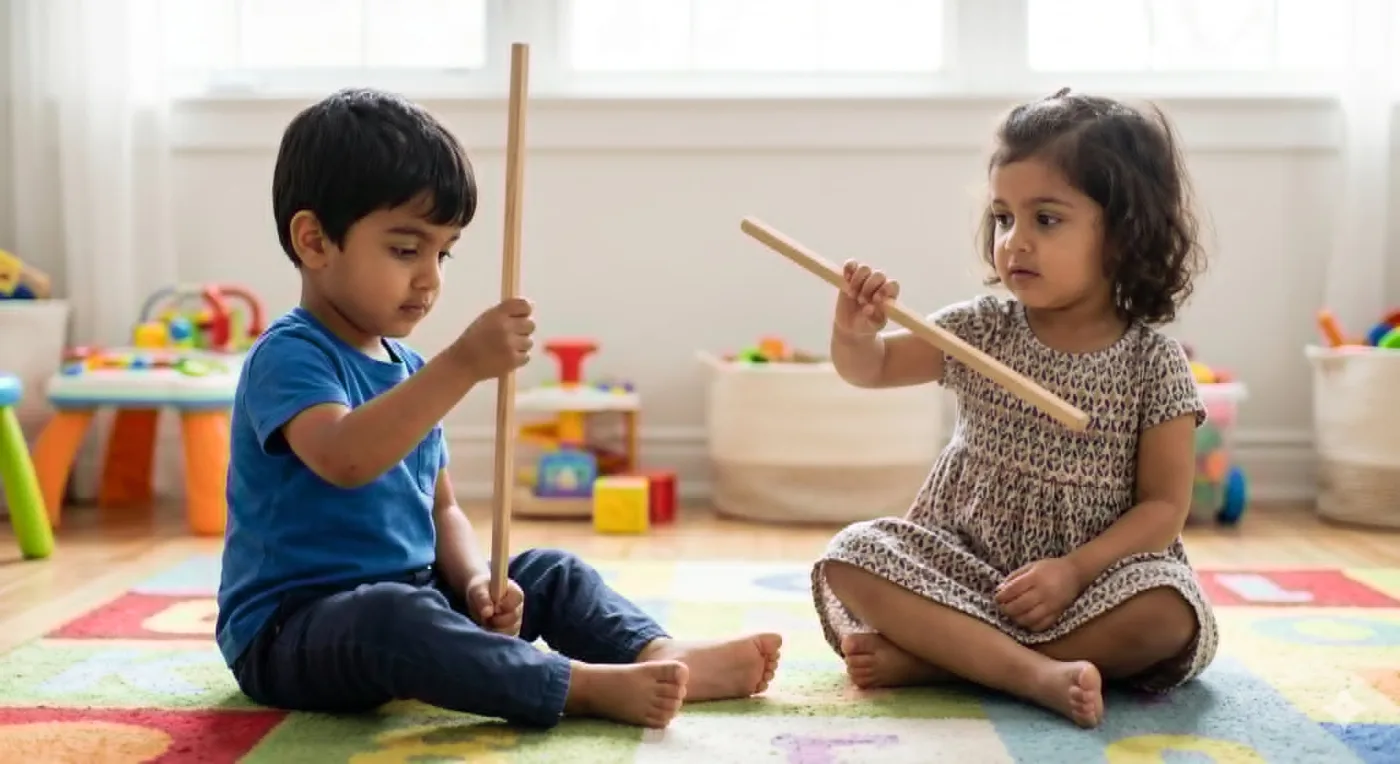
Stage 2: Egocentric and Sensory-Functional Play (3 Months to 2 Years)
The scientific term for this stage is: The Integration of Solitary/Independent Play with the Peak of Functional Play.
During this stage, the child is fully absorbed in playing alone, focusing entirely on their toy with little to no regard for other children. Here, the child begins to engage their senses more deeply, repeating certain actions to explore the outcomes—such as dropping a toy on the floor to hear its sound or pushing objects to watch them move. Through this repetition, the child grasps the concept of cause-and-effect relationships, while developing their skills in sustained attention and sensorimotor exploration.
Stage 3: Onlooker Play and the Onset of Symbolism (2 to 2.5 Years)
This stage features what is known as onlooker play, alongside the beginning of a gradual transition toward symbolic/imaginative play.
Here, the child begins to observe other children while they play; they may ask them questions or talk to them, but without actively joining the play. This stage is crucial as it allows the child to acquire social behaviors through observation. Concurrently, the child's imagination begins to unfold, and their mind is primed to use objects as symbols and abstract concepts, paving the way for full engagement in imaginative play.
Stage 4: Spatial Parallelism and Symbolic Representation (2.5 to 3 Years)
In this stage, parallel play emerges concurrently with the advancement of symbolic/imaginative play.
The child plays adjacent to other children using similar toys, but without direct interaction. In other words, they share the same physical space, yet each child remains within their own world. During this period, imagination flourishes significantly, and the child begins to use objects as symbols—they might use a stick as a sword or a horse, or imagine that blocks are houses and cars. This type of play facilitates language acquisition, nurtures the imagination, and fosters a sense of security in the presence of others
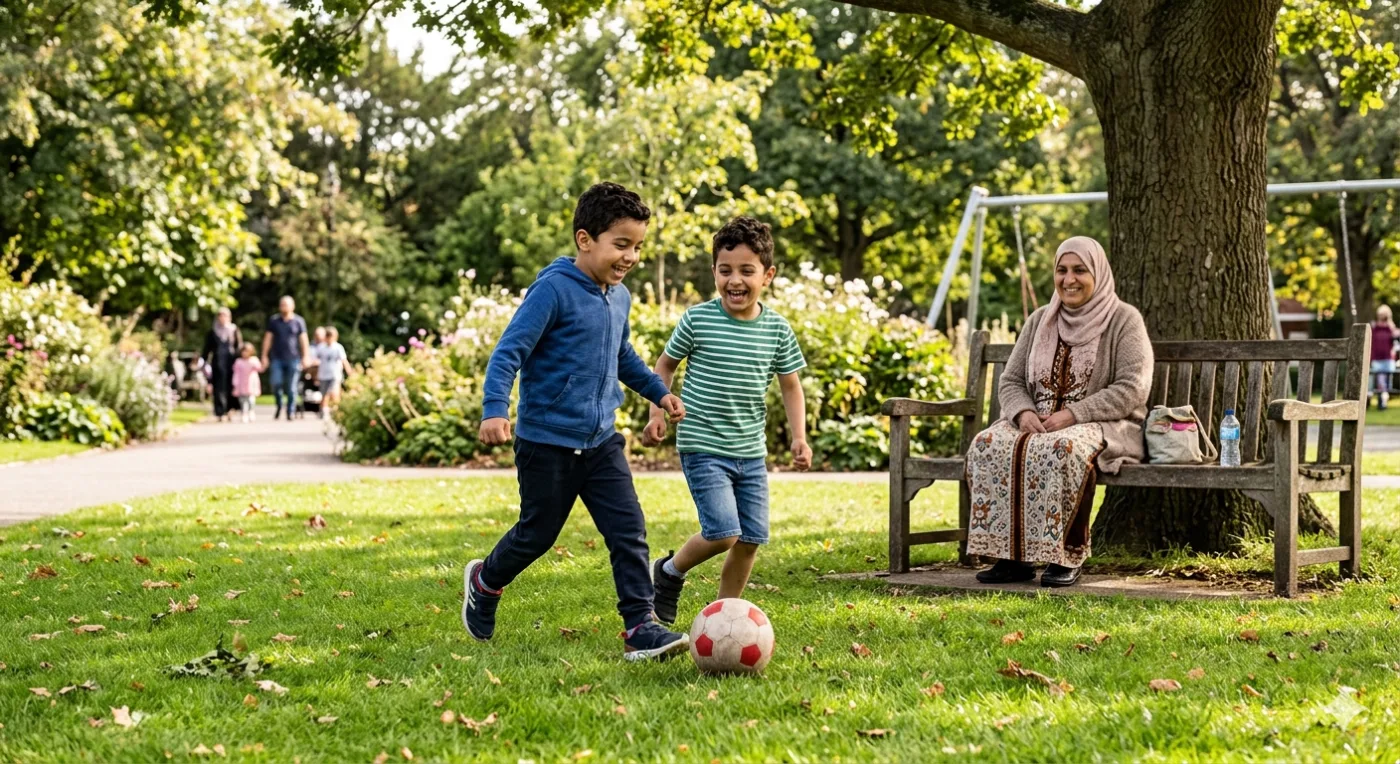
Stage 5: Initial Social Interaction and Complex Fantasy Play (3 to 4 Years)
In this stage, associative play merges with a deeper advancement in imaginative play.
Here, children begin to interact directly with one another, sharing toys and conversing while playing, yet without a clear structure or a fully unified common goal. Concurrently, imaginative play becomes more complex, as the child begins to invent stories and fantasy roles during play. This stage facilitates language development, sharpens problem-solving skills, and fosters a better understanding of others' emotions and perspectives.
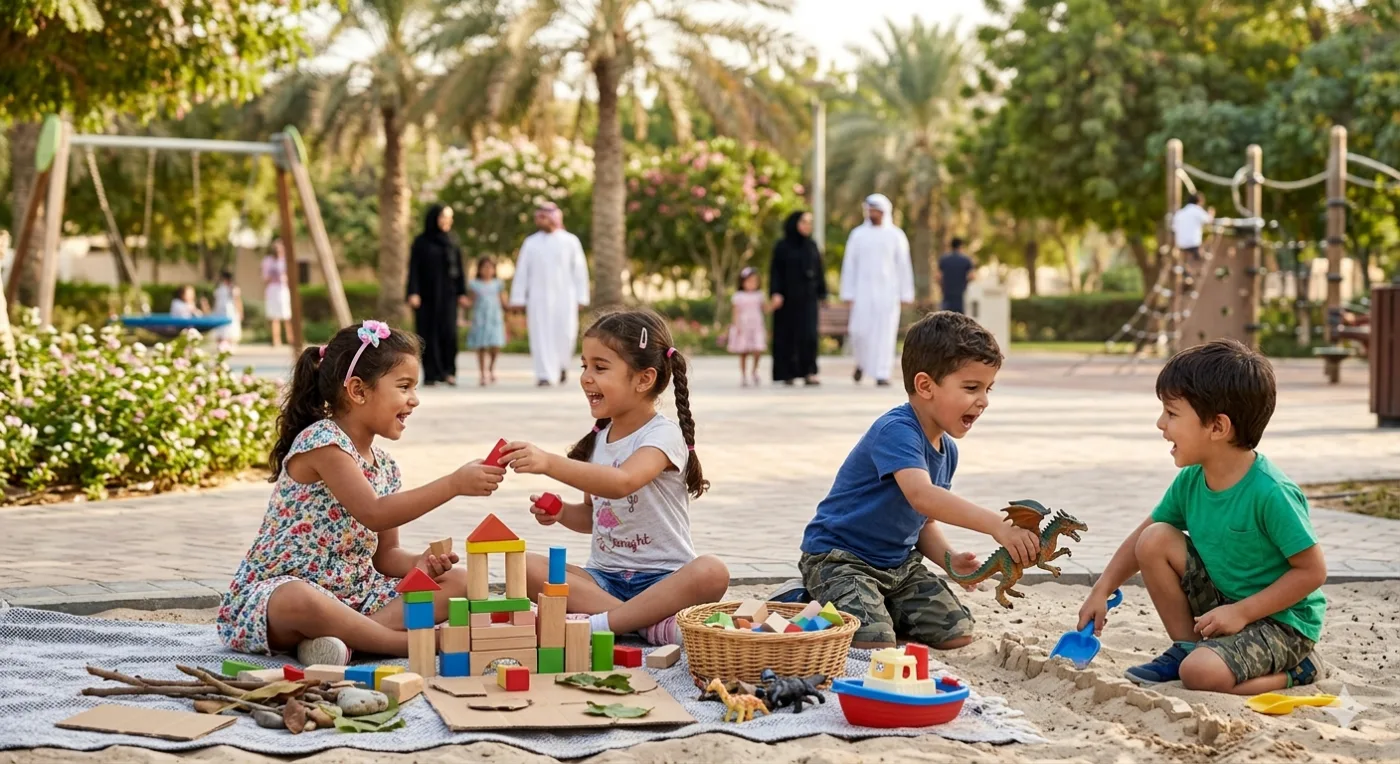
Stage 6: Mature Cooperative Play and Advanced Imagination (4 to 7 Years)
In this stage, the development of cooperative play culminates alongside the maturation of imaginative play.
Children become capable of playing together to achieve a common goal, such as building a specific structure or role-playing within a shared fantasy story. It is here that concepts of turn-taking, leadership, waiting, and cooperation begin to emerge more clearly. Furthermore, children utilize their imagination more broadly to construct complex stories and scenarios, which significantly contributes to strengthening their social and emotional skills.
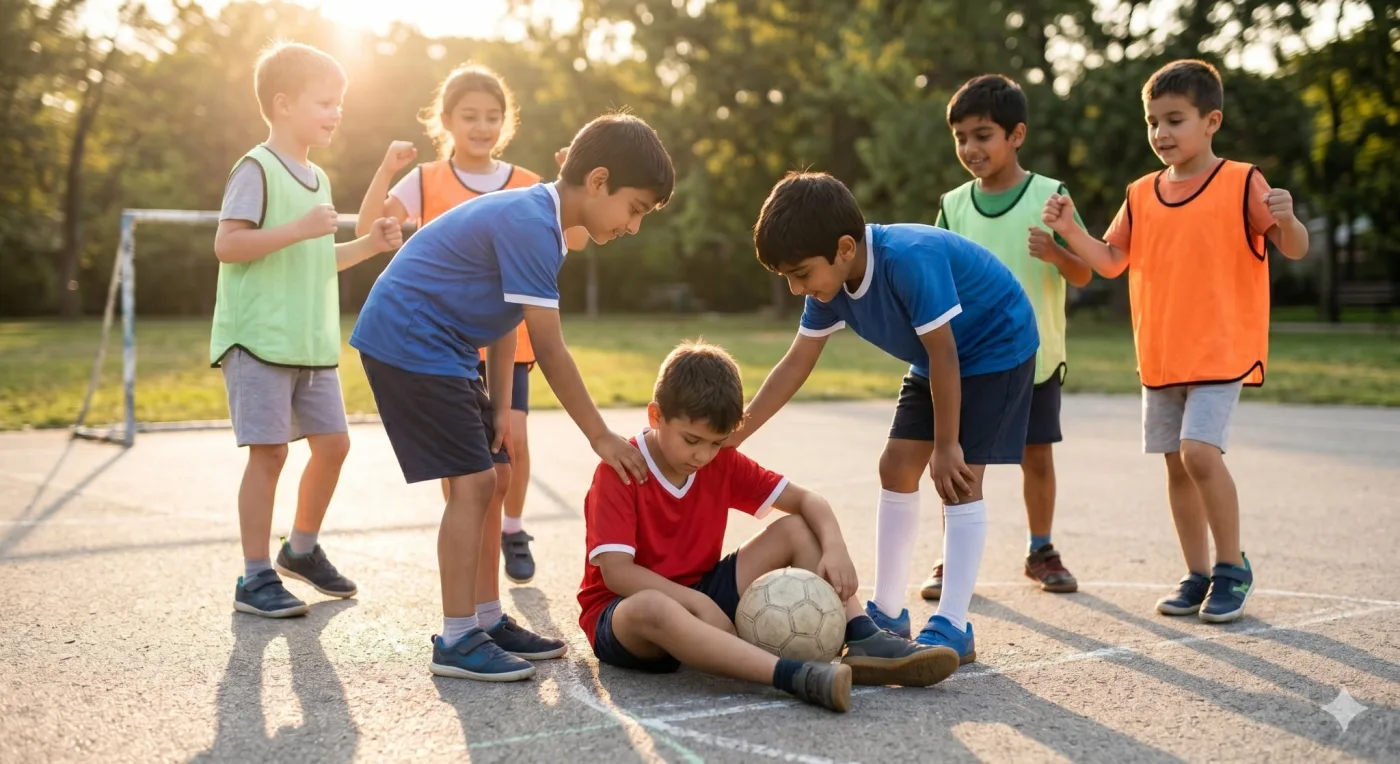
Stage 7: Structured and Organized Play (7 Years and Above)
In this stage, cooperative play persists, but with the child's entry into the phase of games with rules.
The child begins to engage in activities governed by explicit regulations, such as team sports, various athletic disciplines, and board games. Play is no longer driven solely by free imagination; instead, it demands the capacity to comprehend rules, respect turn-taking, collaborate within a team, and regulate emotions during victory or defeat. This stage reflects a heightened level of cognitive, social, and emotional maturity.
The Governing Scientific Principle of This Pathway: The developmental progression of play skills does not always follow a fixed or strictly sequential trajectory. A child may fluctuate between multiple play patterns depending on their psychological state, sense of security, and the nature of the surrounding environment. Furthermore, a child’s transition to an advanced stage does not imply the disappearance of previous ones; rather, they all remain an integral part of their behavioral and skill repertoire, to be utilized across various situations according to their needs.
عمر لقمان
أخصائي العلاج الوظيفي