Introduction
One of the most common questions parents ask when starting solids is:
"Should I begin with purees or try baby-led weaning (BLW)?"
The truth is that there is no single "best" method for every baby. Both approaches can support healthy growth, development, and a positive relationship with food when done safely and appropriately.
Understanding the benefits and challenges of each method can help parents choose the approach that works best for their baby and family.
What Are Purees?
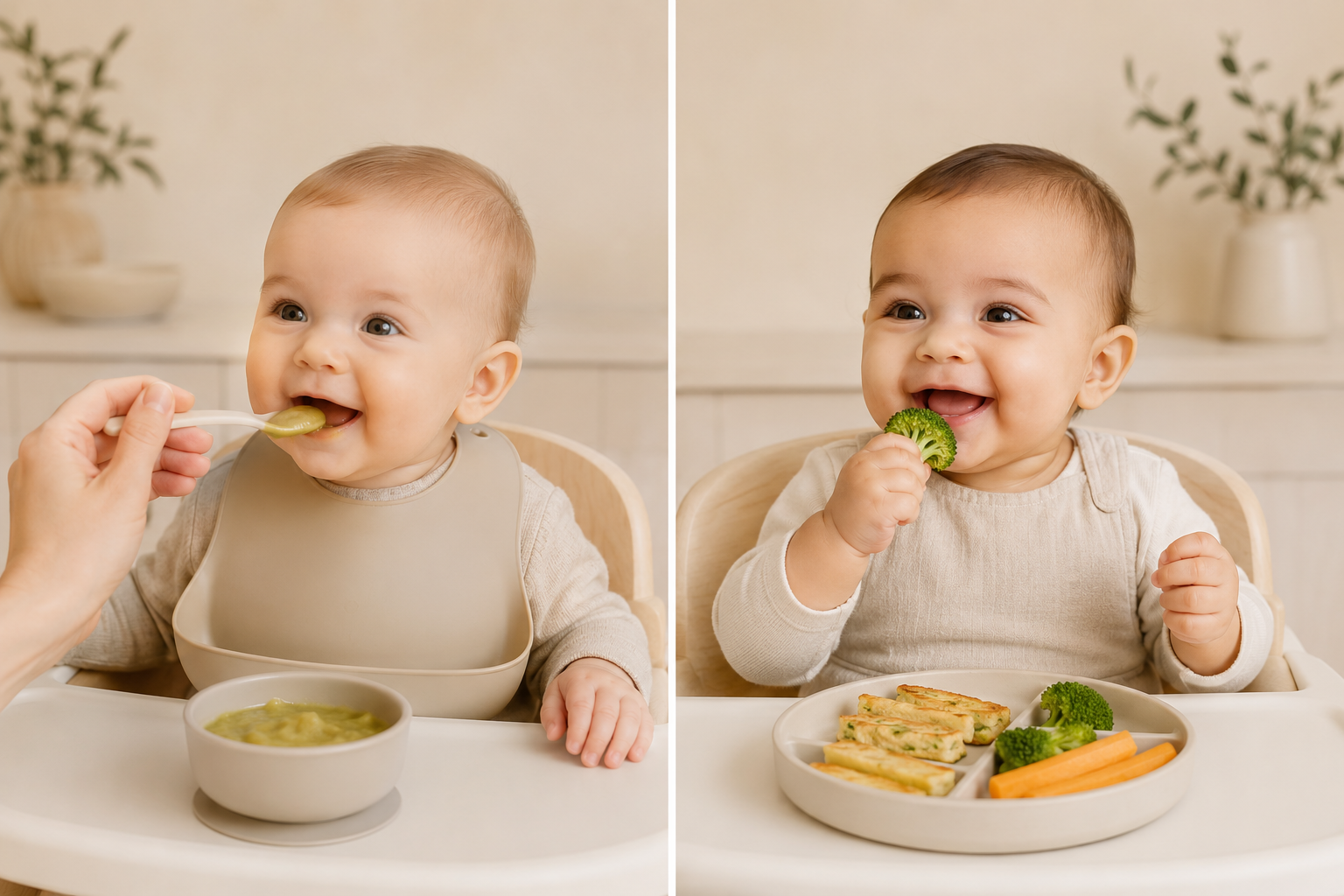
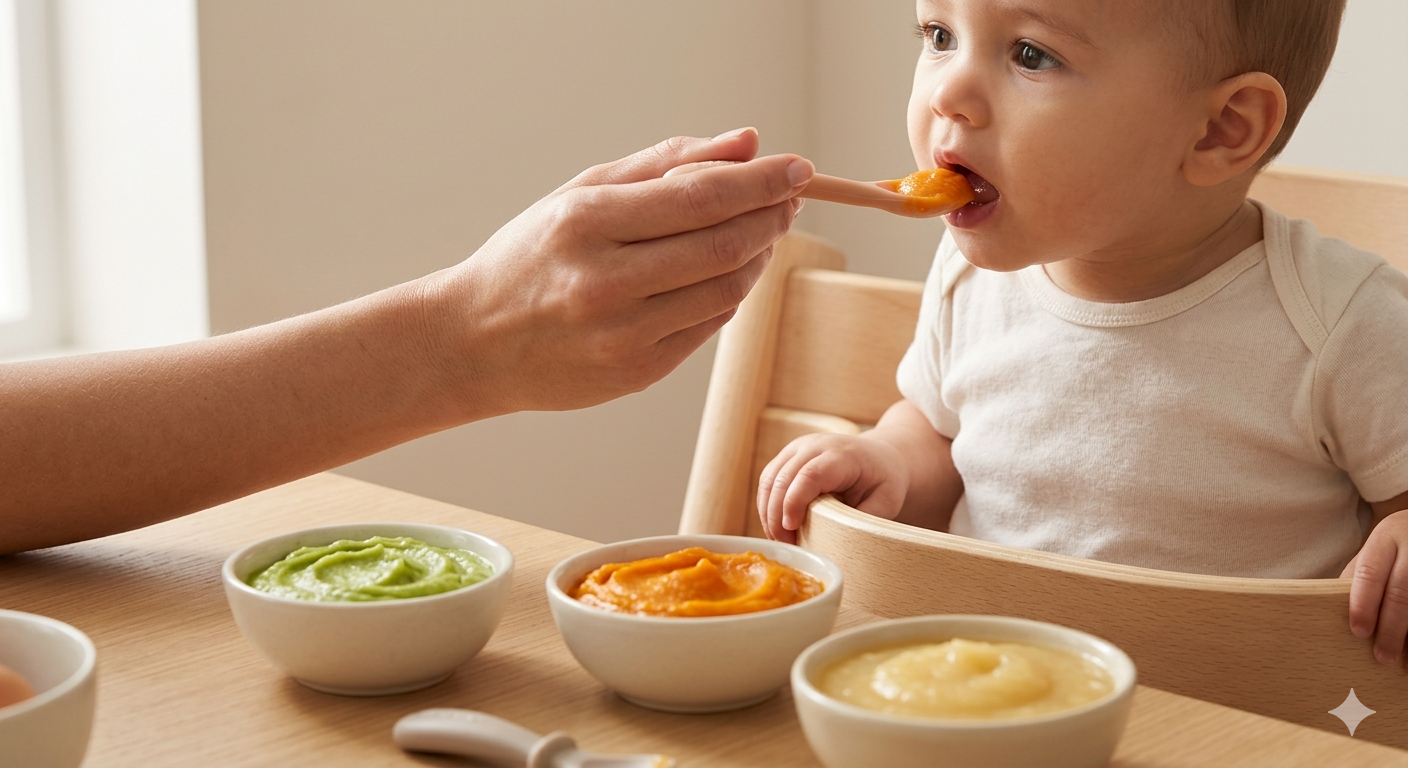
Purees are foods that have been blended or mashed into a smooth texture. Traditionally, babies are introduced to solids through purees around 6 months of age and gradually progress to thicker textures and finger foods.
Examples include:
• Mashed avocado
• Pureed sweet potato
• Applesauce
• Oatmeal
• Pureed vegetables
Benefits of Purees
✓ Easy for parents to prepare and offer
✓ Allows gradual introduction to new flavors
✓ Can be helpful for babies who need extra support with feeding skills
✓ Parents may feel more confident knowing how much their baby is eating
Challenges of Purees
• Babies may have fewer opportunities to practice chewing skills.
• Some children become accustomed to smooth textures and resist textured foods later.
• Feeding can become parent-led rather than baby-led.
What Is Baby-Led Weaning (BLW)?
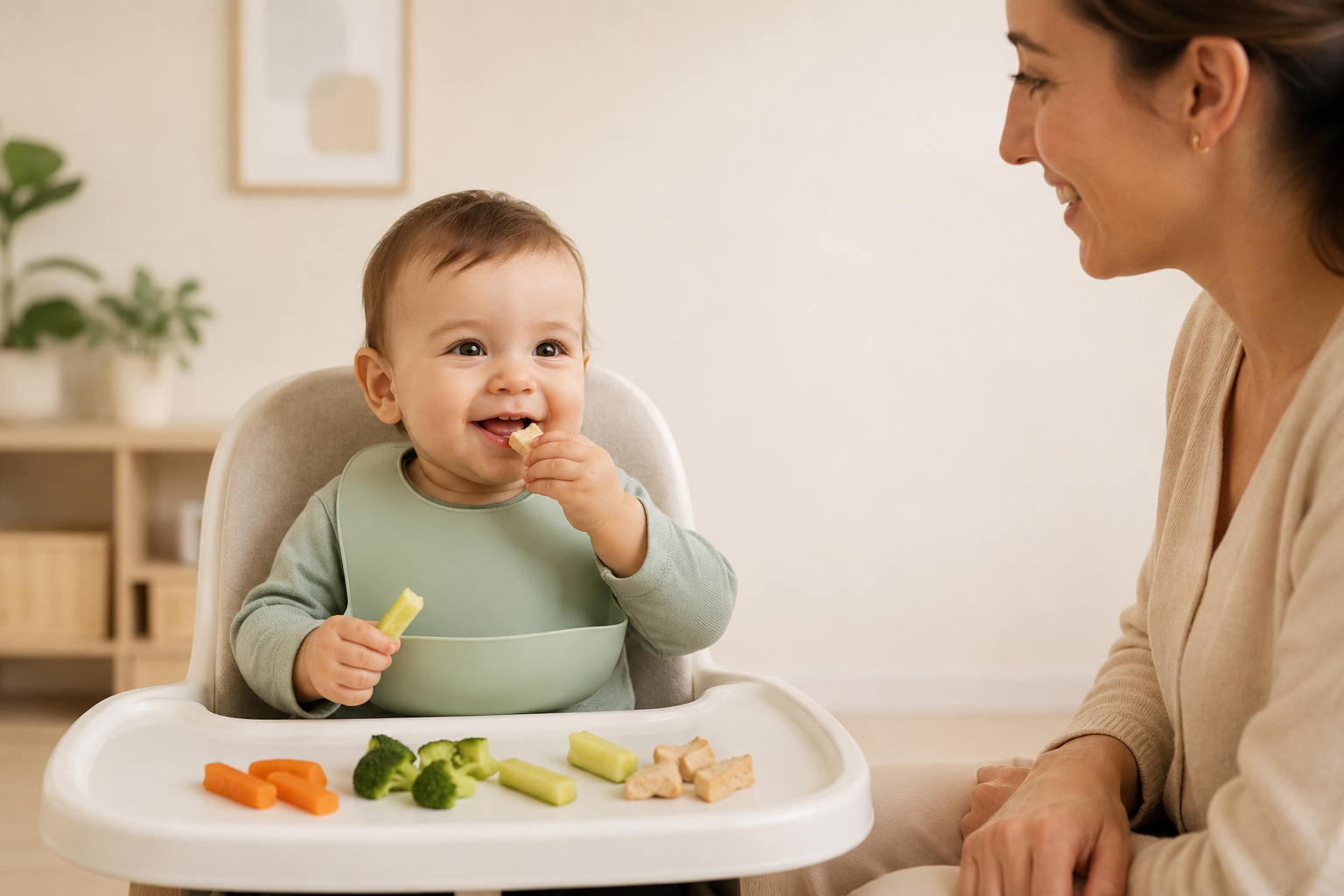
Baby-led weaning is a feeding approach in which babies feed themselves appropriately sized pieces of soft food from the beginning of complementary feeding, usually around 6 months.
Instead of being spoon-fed, babies explore food using their hands and eat at their own pace.
Examples include:
• Soft avocado slices
• Banana spears
• Cooked sweet potato wedges
• Soft scrambled eggs
• Steamed broccoli florets
• Strips of tender chicken
Benefits of Baby-Led Weaning
✓ Encourages self-feeding skills
✓ Supports hand-eye coordination and fine motor development
✓ Allows babies to explore different textures earlier
✓ Promotes responsive feeding and listening to hunger and fullness cues
✓ Can make family meals easier because babies can often eat modified versions of family foods
Challenges of Baby-Led Weaning
• Meals may be messier.
• Parents may feel anxious about gagging.
• It can be difficult to know how much food the baby is consuming.
• Extra attention is needed to ensure adequate iron-rich foods are offered.
Is Baby-Led Weaning Safe?
When done correctly, baby-led weaning can be a safe feeding method for healthy, developmentally ready infants.
Signs a baby is ready for solids include:
• Sitting with minimal support
• Good head and neck control
• Bringing objects to their mouth
• Showing interest in food
• Loss of the tongue-thrust reflex
Parents should always avoid choking hazards such as:
• Whole grapes
• Whole nuts
• Popcorn
• Hard raw vegetables
• Large chunks of meat
• Hot dogs cut into rounds
Remember that gagging is different from choking. Gagging is a protective reflex that helps babies learn how to manage food safely in their mouths.
What Does Research Say?
Current research suggests that neither purees nor baby-led weaning is clearly superior.
Studies show that:
• Growth outcomes are generally similar.
• Both methods can support healthy eating habits.
• Self-feeding may encourage greater independence.
• Early exposure to a variety of textures may reduce food selectivity in some children.
The most important factor is not the method itself, but providing a wide variety of nutritious foods while creating a positive feeding environment.
The Best Approach: A Combination Method
Many pediatric dietitians recommend a flexible approach that combines the benefits of both methods.
For example:
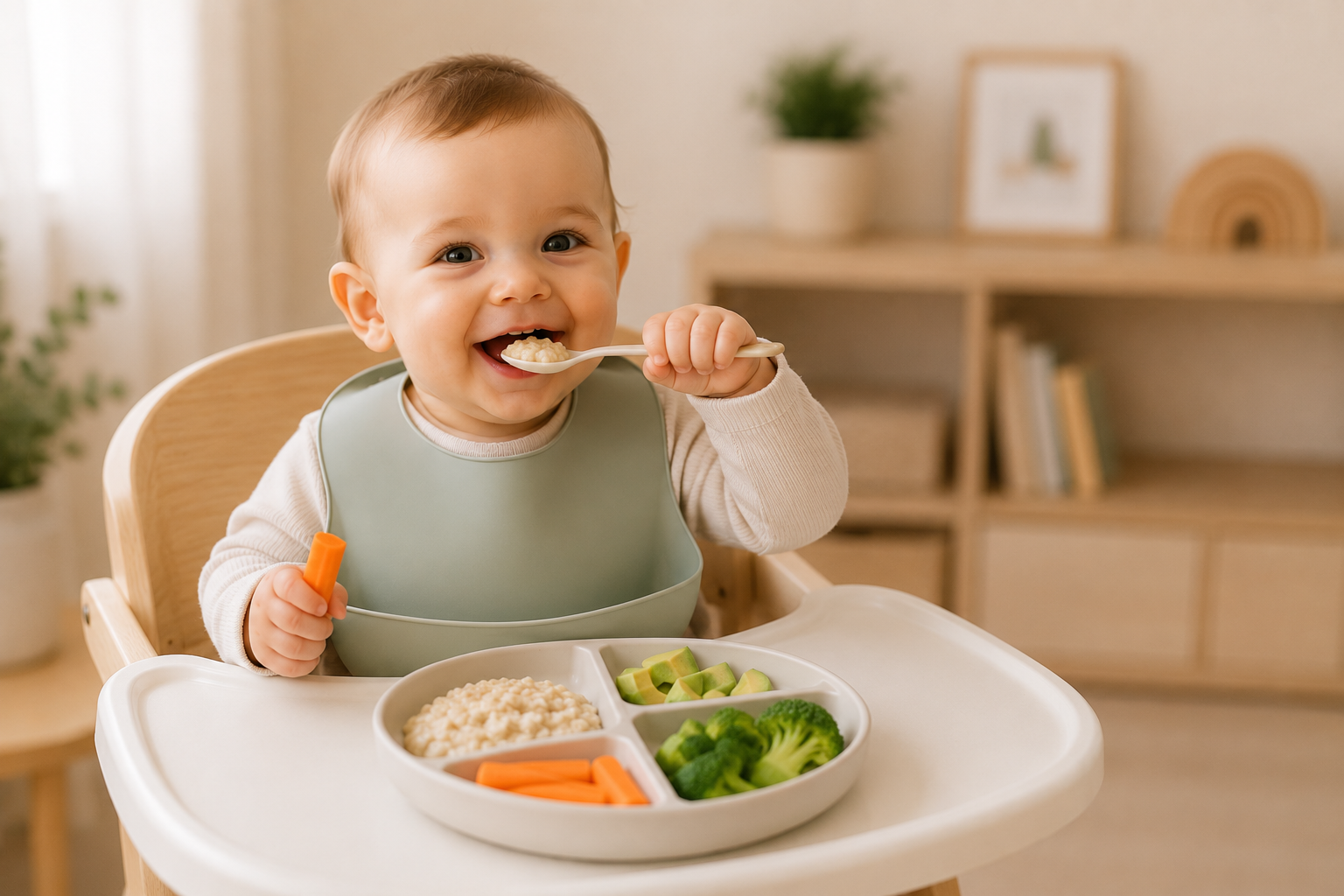
• Offer oatmeal on a spoon.
• Provide avocado slices for self-feeding.
• Allow babies to explore food with their hands while occasionally using a spoon.
This combination helps babies:
• Learn self-feeding skills
• Experience different textures
• Meet nutritional needs
• Develop confidence around food
Tips for Parents
1. Start solids around 6 months when your baby shows readiness signs.
2. Prioritize iron-rich foods such as meat, eggs, beans, lentils, and iron-fortified cereals.
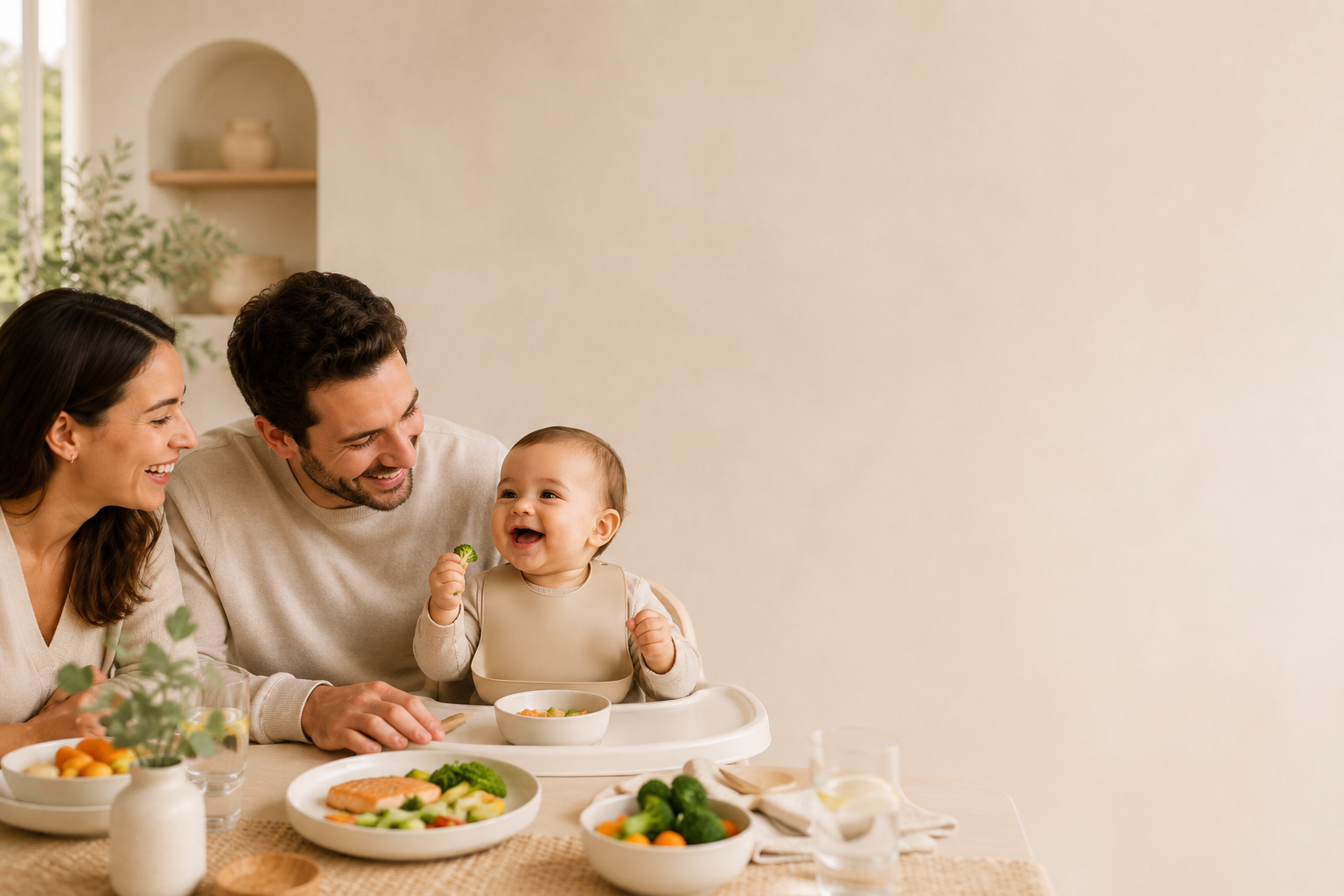
3. Eat together whenever possible.
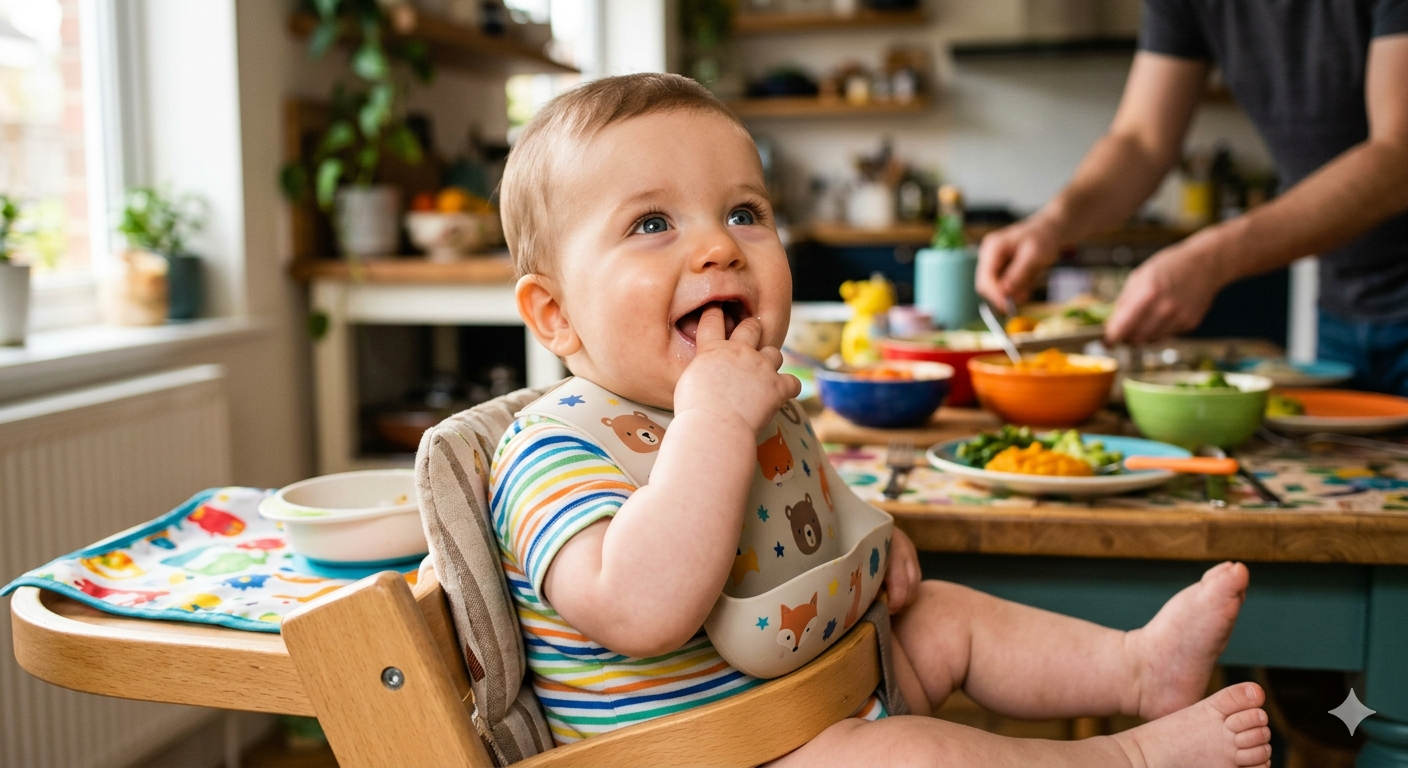
4. Allow your baby to explore and make a mess.
5. Avoid pressuring your baby to eat.
6. Progress gradually to more textures.
7. Always supervise meals closely.
Final Thoughts
The question is not whether purees or baby-led weaning is better.
The real goal is helping your baby develop feeding skills, enjoy a variety of foods, and build a healthy relationship with eating.
Whether you choose purees, baby-led weaning, or a combination of both, a responsive and positive feeding experience is what matters most.
Every baby is unique, and the best feeding method is the one that safely meets your child's developmental and nutritional needs.